Software Localization
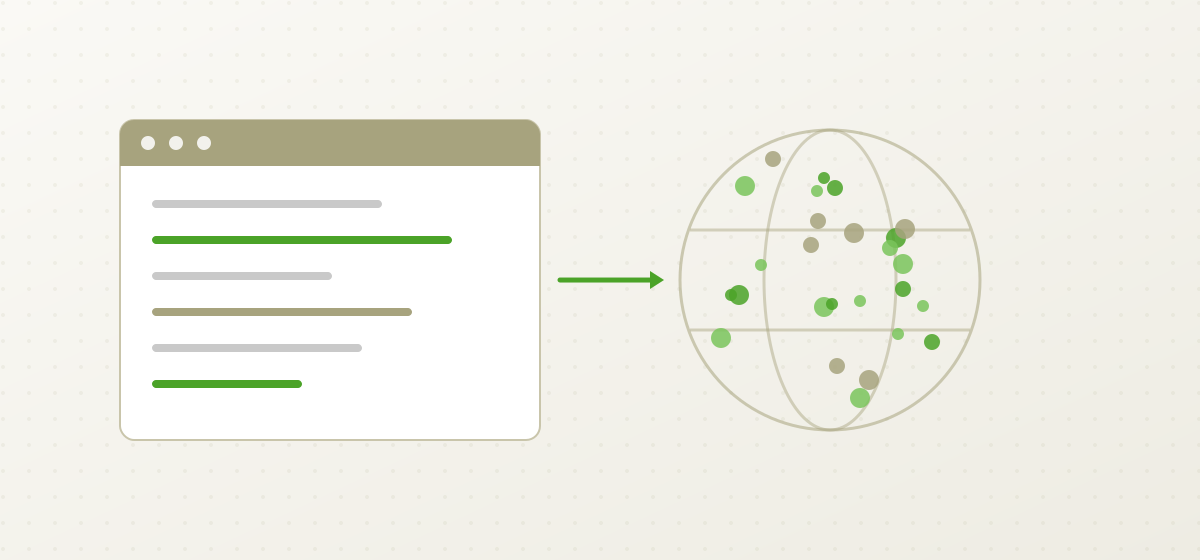
From a single hard-coded language to a shipping multi-locale build — string extraction, catalogue setup and a translation cycle that runs every release.
Learn moreWe are a collective of translators and engineers who localize free and open source projects — from string extraction through to the reviewer who signs off the final build.
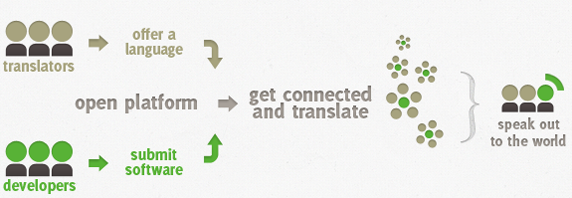
Developers submit software. Translators offer a language. Everything in between is the part we run for you.
You bring a repository. We audit it for internationalization problems before a single string is sent out.
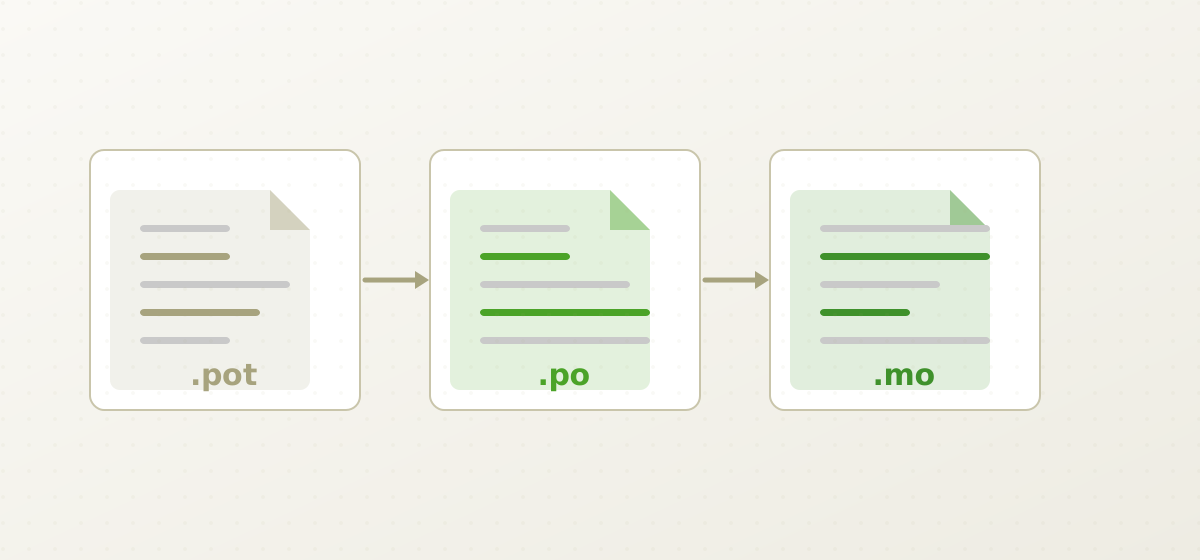
Strings are pulled into a catalogue with real context — screenshots, comments, plural rules and a glossary.
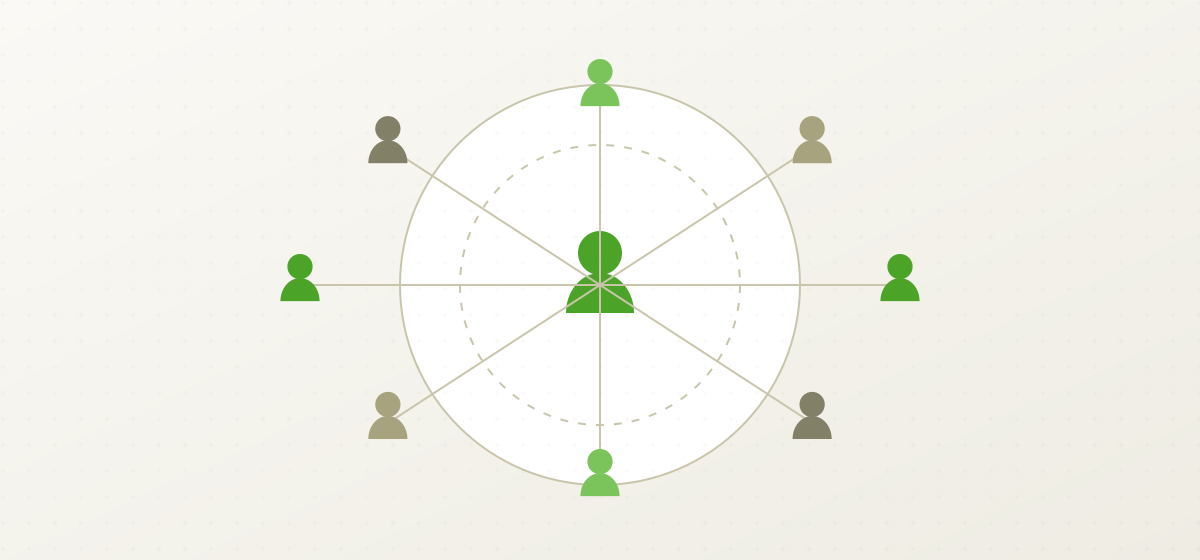
Language teams work in parallel. Every string gets a translator and a separate, named reviewer.
Catalogues are compiled, tested in a real build, and merged. Then we do it again next release.
Pick one, or let us run the whole localization programme end to end.
From a single hard-coded language to a shipping multi-locale build — string extraction, catalogue setup and a translation cycle that runs every release.
Learn moreAn independent, scored review of an existing translation that finds the mistranslated destructive action before your users do.
Learn moreMarketing pages, help centres and API references translated with the structure — and the hreflang plumbing — intact.
Learn moreWe recruit, onboard, mentor and retain the volunteers who translate your project, and build the review structure that keeps quality steady.
Learn moreA codebase audit that fixes the structural problems — concatenated strings, baked-in layout, byte-based text — before translation begins.
Learn more













Roughly three quarters of the world does not use English comfortably. For that majority, an untranslated interface is not merely inconvenient — it is a wall.
They found seventeen concatenated strings we had lived with for years, and then wrote the lint rule that stops us adding an eighteenth.
Our Brazilian user base tripled in eight months. The only thing that changed was that the interface finally spoke Portuguese.
I joined to fix one typo in the Norwegian build. Three years later I run the team and mentor two new reviewers.
The quality report was the first time anyone gave us a number instead of an opinion about our translations.
Our contributors are maintainers, students, professional linguists and hobbyists. These are a few of the regulars.
 Amy
Amy Dwight
 GnuMax
 Hils
Hils iiKozen
 Jarred
 Klutzon
 Marcos
 Matt
Matt NoNumber
 OceanWatcher
 OT2Sen
 Parth
Parth Steven
 Sully
Sully Tess
TessLong, practical write-ups of the problems we keep running into — and what actually solved them.
Most localization projects fail before a translator sees a single string. Here is the engineering work that has to come first — and how to tell whether your codebase is ready.
A language team is a small organisation. It needs a purpose, a structure, a way in and a way up — otherwise it survives exactly as long as its most stubborn volunteer.
Gettext is nearly forty years old and still runs a large share of the free software world. Here is the whole pipeline, command by command, including the parts that bite.